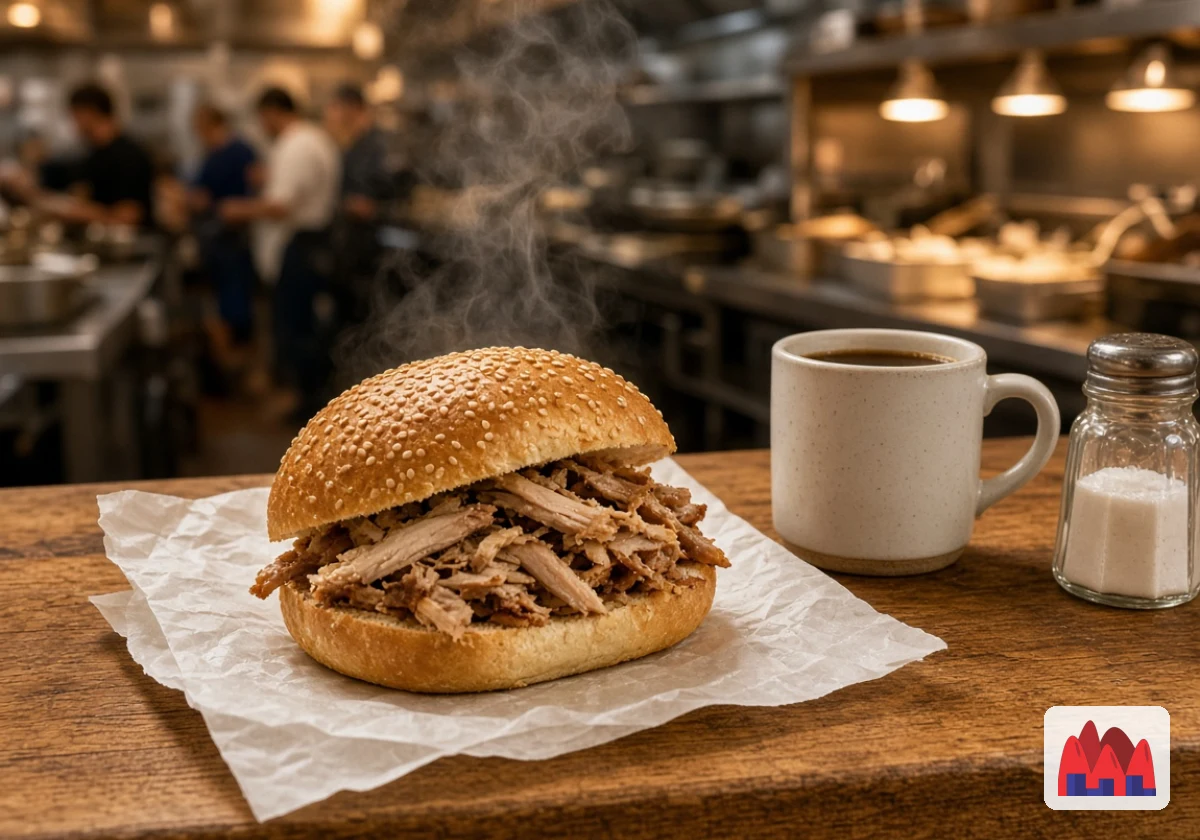
A Philadelphia roast pork sandwich stacks thin garlic pork, sharp provolone and bitter greens on a seeded roll, then soaks the lot in jus. That way, each layer cuts through or carries the one beside it, and that balance is where the flavour comes from.
Still, most people outside Philly meet the cheesesteak first. But if you ask locals, they will steer you to the pork sandwich before the steak. Our Byblos Philly team fully agrees with that local recommendation, because the pork sandwich shows you a side of Philly food tourists often miss.
This guide covers where the Philly roast pork tradition started, what each layer brings, and how the sandwich compares with a cheesesteak. You’ll also get a home method that keeps the pork juicy and the roll intact.
The Start of Philly Roast Pork Tradition
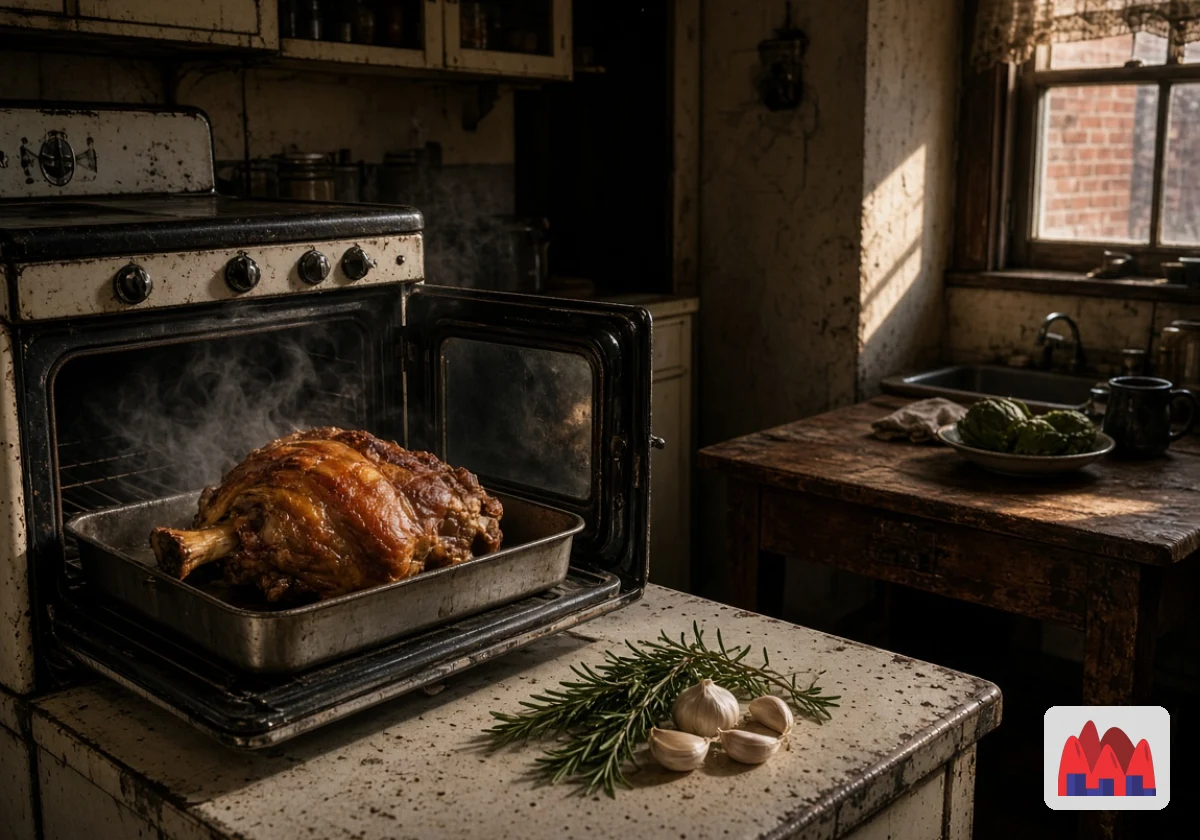
Originally, Philly roast pork began in the rowhouses of South Philadelphia. As Italian immigrants settled the neighbourhood generations ago, many brought porchetta-style cooking from home. Porchetta is a pork roast rubbed with garlic, rosemary and fennel, then cooked slowly until it turns tender.
In those homes, family cooked and roasted a pork shoulder on Sunday, and the leftovers went into crusty bread for Monday’s lunch. This habit stretched one roast across a working family’s week, which counted when money ran short.
From there, the Italian roast pork sandwich moved out of homes and onto lunch counters. Small delis around South Philadelphia sold it to workers who wanted a filling, cheap meal. Those shops later added sharp provolone cheese and greens, but the core recipe has barely shifted since.
So the history still shows up in every sandwich you order in Philly today. Garlic, slow roasting and bitter greens all trace back to Sunday tables rather than a restaurant test kitchen.
Roast Pork Sandwich Toppings and Layers: Bread, Pork, Provolone, Greens and Jus
Every layer in a Philadelphia roast pork sandwich does a specific job, and each one started as a fix for a practical problem. Rich pork shoulder needed something sharp beside it to cut through the fat. A ladle of jus needed bread strong enough to hold it without falling apart.
Below, we’ve explained the five layers that make up a proper Roast Pork Sandwich.
1. The Seeded Roll That Holds It All Together
To create the base, you need a long Italian roll coated in sesame seeds. Its crust has to stay firm while the jus soaks into the soft crumb inside. Soft supermarket hot dog buns fall apart within minutes. So look for a roll with a crackly shell that springs back when you press it.
If making a roll feels hard at home, ask your local bakery for sesame-crusted Italian rolls, or grab a sturdy Vietnamese-style roll instead. Warm it for a few minutes so the seeds toast and the crust firms up.
2. Garlic and Herb Pork, Roasted Slow and Sliced Thin
Generally, pork shoulder should carry enough fat to stay moist through a long, slow roast. For that reason, cooks rub the shoulder with garlic, rosemary, fennel seed and black pepper before it goes into the oven.
Beyond the seasoning, the slicing creates the final bite. Paper-thin slices soak up jus far better than thick chunks. So slice the pork across the grain, keeping each piece thin enough that you can almost see through it.
Quick Tip: Chill the cooked roast overnight before slicing. Cold pork holds its shape, so you’ll get cleaner, thinner slices with less shredding.
3. Sharp Provolone: Why Mild Cheese Doesn’t Cut It
Mild cheese disappears behind the pork, while sharp provolone cheese adds a salty bite that cuts through the richness. That salty bite comes from a longer ripening time, which gives aged provolone a stronger tang than younger, milder cheese.
The thing is, deli provolone labelled “mild” leaves your sandwich tasting flat once you add the garlic and jus. Instead, ask for provolone piccante, which some delis sell as aged or sharp provolone.
Once you have the right cheese, where you place it counts just as much as the cheese type. So lay the slices straight onto the hot pork rather than the bread. That way, heat from the meat softens the cheese evenly without turning it greasy (and nobody wants an oily, soggy roll at lunch).
4. Broccoli Rabe or Spinach: The Bitter Green Debate
Broccoli rabe has a sharp, bitter edge and is the traditional choice at Philly roast pork counters. Spinach, on the other hand, offers a softer, milder option for people who find rabe too strong.
Whichever green you choose, sauté it in olive oil with plenty of garlic and a pinch of chilli flakes. We’ll admit our soft spot for rabe, though, since its bitterness balances the provolone’s salt so well.
Once the greens are cooked, squeeze them hard before adding them to the sandwich. Otherwise, leftover water dilutes the jus and turns the bottom of the roll soggy before your first bite.
5. A Ladle of Jus Finishes the Sandwich
Jus is the seasoned pan juice left in the tray after the pork roasts, and it carries most of the sandwich’s garlic flavour. In fact, Sandwich Tribunal’s tour of Philly’s roast pork shops noticed that many chefs reheat the sliced pork in its own gravy. And reheating the slices this way keeps each one hot and moist until it lands on the roll.
To make the same jus at home, skim the fat off your pan juices first. Then thin them with a little chicken stock if they taste too salty. After that, keep the jus warm over a low heat so it’s ready the moment you start assembling.
Once you’ve built the sandwich, spoon extra jus over the top just before serving (keep a big stack of napkins within easy reach). Timing matters with that extra jus, since any you pour too early soaks through the crust before your first bite.
So add that final ladle of jus no more than a minute before you eat. From there, try to finish the sandwich within about five minutes, while the crust still holds firm against the juices. If you’re feeding a crowd, serve the jus in a small jug so everyone can pour their own at the table.
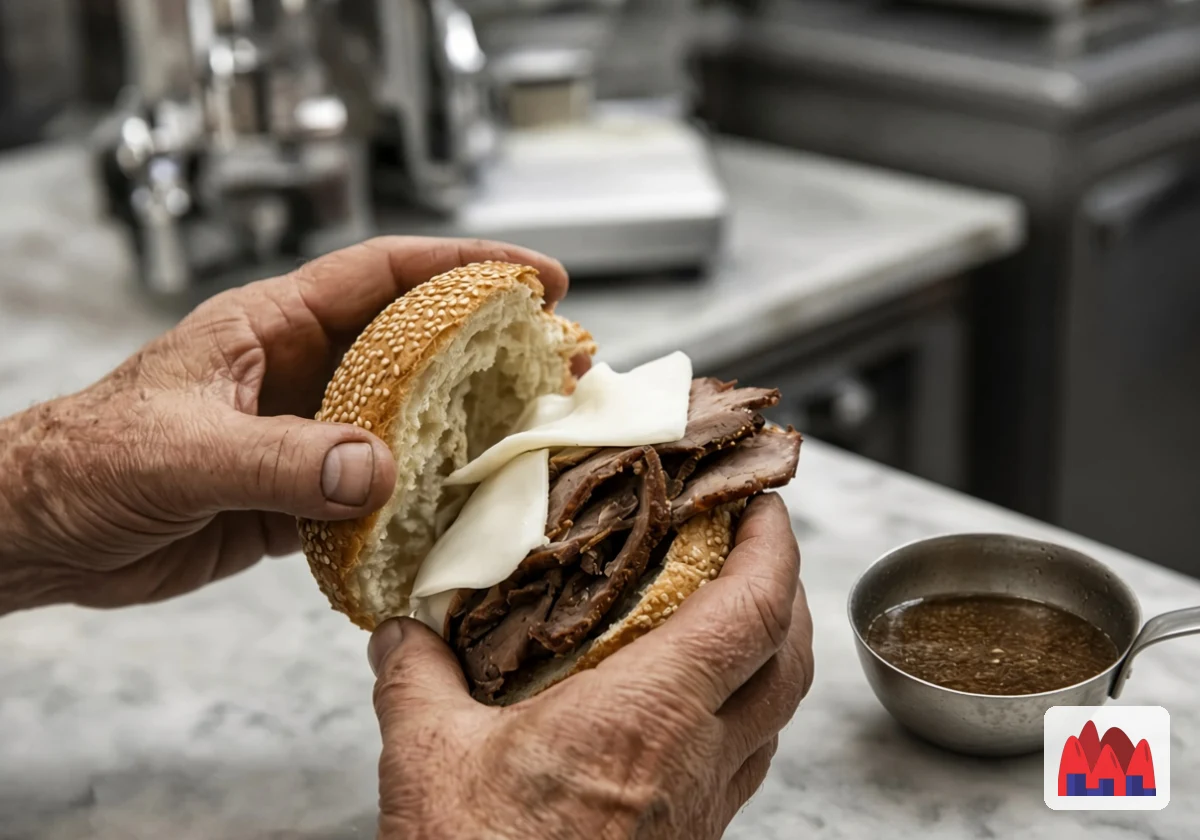
How Does the Roast Pork Sandwich Differ From the Cheesesteak?
The roast pork sandwich uses slow-roasted garlic pork and bitter greens, while the cheesesteak relies on griddled beef and melted cheese. Both come from Philadelphia, yet they suit quite different cravings.
To decide which one fits your appetite, the comparison below sets them side by side.
| Feature | Roast Pork Sandwich | Cheesesteak | What It Means for You |
|---|---|---|---|
| Meat | Pork shoulder, roasted slowly and sliced thin | Thin ribeye, cooked fast on a flat-top grill | Pork takes hours, while steak cooks in minutes |
| Cheese | Sharp provolone | Provolone, American or Cheez Whiz | Sharp cheese suits pork’s richness |
| Greens | Broccoli rabe or spinach | Usually none, with fried onions common | Greens add bitterness that offsets the fat |
| Moisture | Pork jus ladled over the top | Grill juices and melted cheese | Roast pork needs a sturdier roll |
If you lean towards bold, garlicky flavours with some bite, the roast pork version is the stronger pick. Check out our Philly-style menu if you’d like to taste the cheesesteak side of the debate first.
Making a Philadelphia Roast Pork Sandwich in Your Own Kitchen
If the pork sandwich won, here is how to build one at home. Start with a boneless pork shoulder of about two kilograms from your local butcher. Next, rub the meat with crushed garlic, chopped rosemary, fennel seed, salt and pepper, then roast it at around 160°C for three to four hours. During this process, add a cup of water to the tray so the juices don’t scorch.
A slow cooker works too, although you will lose the browned edges an oven gives. Whichever you choose, oven or slow cooker, rest the meat, chill it overnight and save every drop of pan juice for the jus. Once the pork is ready, have a look at the order for building each sandwich:
- Slice the cold pork as thinly as your knife or slicer allows.
- Simmer the slices in the skimmed jus for two to three minutes.
- Toast the seeded roll and lay sharp provolone along one side.
- Pile on the hot pork, then add the squeezed garlic greens.
- Finish with a little extra jus over the top just before serving.
Among those five steps, the second one does the most work for your finished sandwich. Simmering the slices reheats the pork without drying it out, and the jus seasons every slice before each one meets the bread. So skip the second step, and you’ll end up with lukewarm meat under cheese that never melts.
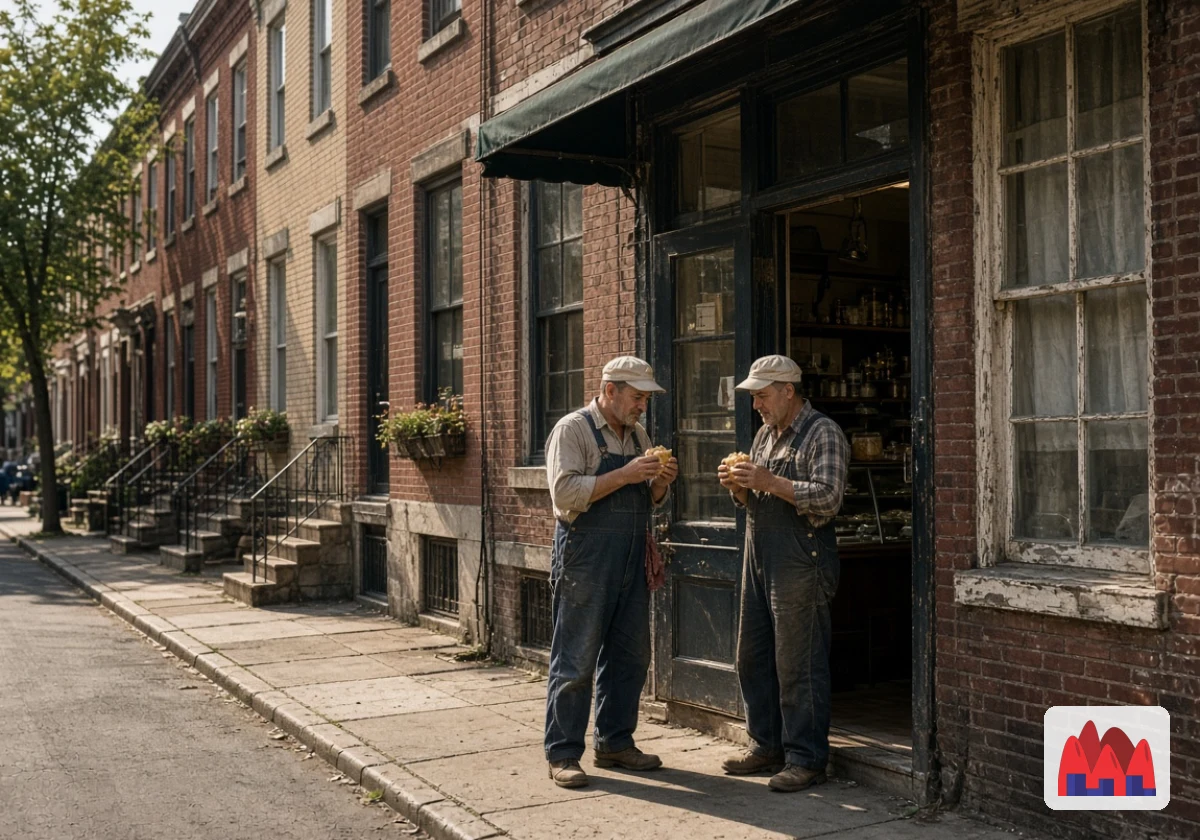
Order One, Make One, and Taste the Tradition for Yourself
The Philadelphia roast pork sandwich earns its reputation through balance, with garlic pork, sharp provolone and bitter greens each keeping the others in check. Take one of those layers away, and the whole sandwich will taste heavier and flatter.
So roast a shoulder this weekend and test the build for yourself. Swap rabe for spinach on your second round and see which side of the debate you land on.
Ready to taste more Philly flavour without the long flight? Get in touch with Byblos Philly for Philly-style food in Brisbane and friendly tips on building your own sandwiches at home.