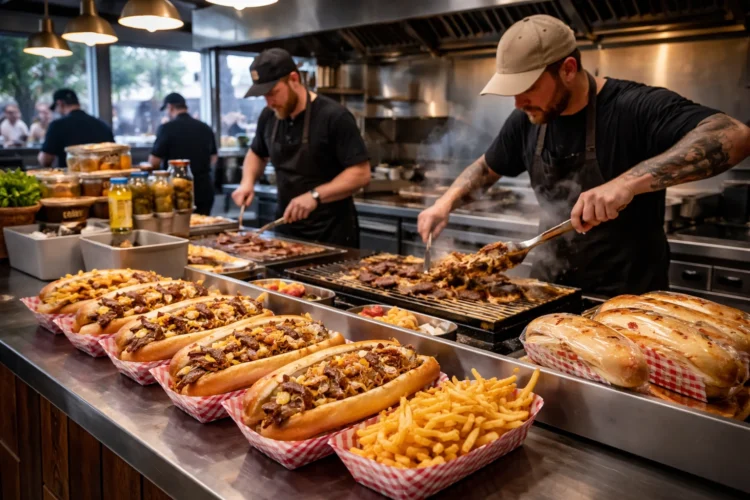
A Philly-inspired menu comes to life in Queensland kitchens through recipe development that balances American boldness with local ingredients and tastes.
You’re probably wondering how restaurants translate cheesesteak flavour using Brisbane beef, or why some fusion dishes work while others feel disjointed on the plate.
We manage this balance daily at our spot, Byblos Philly. Creating recipes for fusion food means juggling ingredient costs, training kitchen staff on unfamiliar techniques, and testing dishes until they taste right.
Most restaurant owners struggle with this balance between authenticity and what Queensland customers will actually order. But you don’t have to be one of them.
This article will walk you through the real kitchen operations behind developing fusion recipes. We’ll cover flavour translation, food costs, staff training, customer testing, and what happens when recipes fail.
Read on to see how Philly-inspired menus get built in Brisbane kitchens.
Recipe Development Starts with Flavour Translation
Recipe development for fusion menus means testing how Philly flavours adapt to Queensland ingredients while keeping the original dish recognisable and delicious.
When you develop recipes that mix two food cultures, you’re translating flavour memories into something Brisbane customers will love and order again. The recipe developer tests every ingredient swap, every cooking technique, and every seasoning adjustment to find the balance and choose standard menu items.
Here are the main areas where testing makes or breaks fusion recipes:
Testing Philly Classics with Queensland Ingredients
What happens when you try cooking a Philly cheesesteak with local Queensland beef? You get cheesesteak flavour that stays bold when you swap ribeye for grass-fed beef from Sunshine Coast farms. The marbling keeps meat juicy while the grass-fed profile adds cleaner flavour Brisbane diners prefer.
Hoagie rolls also need Queensland flour blends because humidity changes the dough texture and rise time completely. If you use American flour ratios, rolls won’t hold up in Brisbane’s climate.
You may even have to replace authentic Philly provolone with aged cheddar from local dairies since provolone costs almost triple here. But you know what? That aged cheddar delivers the same sharp, melty bite your customers expect.
When Traditional Recipes Need Local Adjustment
Brisbane diners eat differently from Philadelphia crowds, which means recipes need adjusting to respect both food cultures without compromising either. They expect fresh vegetables on everything, so you may swap iceberg lettuce for rocket and herbs.
Even Philly’s heavier cream sauces need lightening, as Queensland heat can make rich food feel too much at lunchtime. At the same time, spice levels often increase slightly, since local palates tend to handle more heat than traditional East Coast seasoning.
Kitchen Operations Behind Every Menu Launch
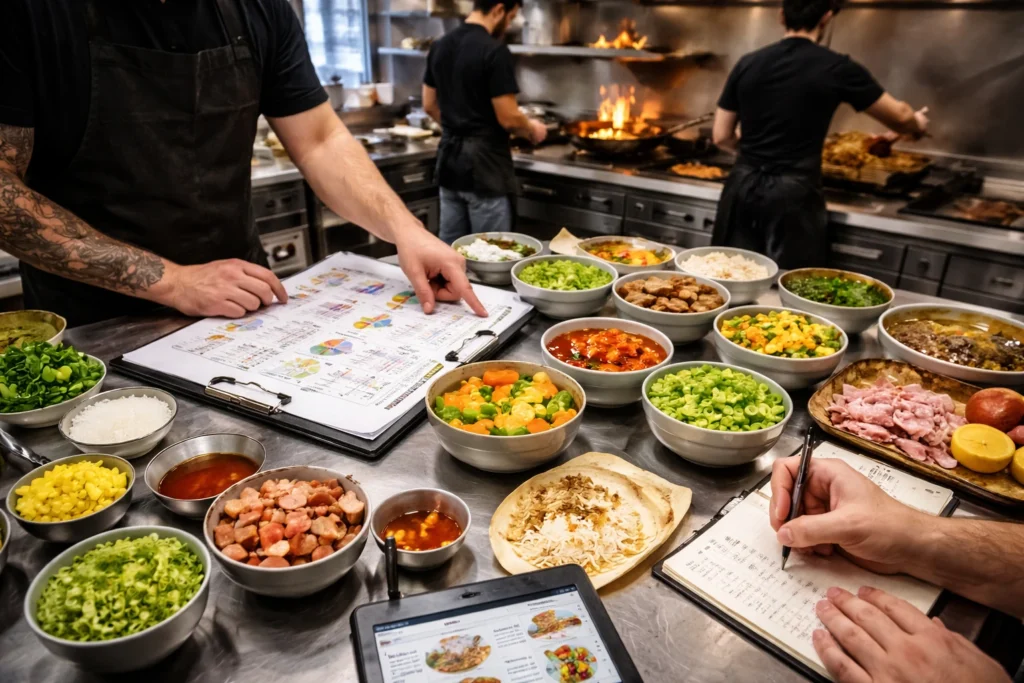
Ever wonder why some fusion dishes work perfectly while others feel like two separate meals crammed onto one plate? It’s because they skip the operations planning that makes recipes work in a busy kitchen.
- Test Kitchen Trials: Test kitchen runs recipe trials for three weeks before any dish hits the actual service menu. During those weeks, your kitchen staff should document every step, every tool needed, and every potential mistake that could happen during rush service.
- Prep List Adjustments: Not every ingredient is available year-round in Queensland. That’s why the prep process and daily operations change constantly based on what you can batch-cook each day.
- Timing Chart Creation: Line cooks need exact timing charts since fusion dishes combine two different cooking speed requirements at the same table.
Down the track, this planning separates restaurants that maintain quality from those that collapse under pressure.
How Food Costs Influence Menu Choices
Food costs determine which Philly ingredients you import and which Queensland alternatives you source locally to keep menu prices profitable.
We’ve seen many restaurant owners who face tough decisions when authentic ingredients cost triple what local substitutes run (and the numbers don’t lie on this one). Their concern isn’t baseless as profit margins shrink fast when you’re importing specialty items weekly.
Let’s break down how you can handle this balance:
Balancing Imported Philly Staples with Local Produce
Maintaining food quality is closely related to inventory management. When you source ingredients strategically, you keep the authentic taste without destroying your business budget.
These decisions happen daily in successful kitchens:
- Cheese Strategy: Cheese costs drive menu pricing as provolone imports eat into margins. So most restaurants balance expensive provolone with affordable local mozzarella to keep dishes profitable while delivering that signature melt.
- Fresh vs Frozen: Tomatoes come fresh from Flame Hill markets every weekend, which cuts costs and boosts flavour. Meanwhile, Amoroso rolls a ship frozen from the States and arrives monthly in bulk orders.
- Seasoning Swaps: Imported seasonings like oregano blends cost triple, so fresh Queensland garlic replaces most dried versions here and there.
Portion Sizes That Honour Both Traditions
Philly often serves portions big enough to feed two. Brisbane diners split plates and order multiple dishes to share. The sweet spot sits around 350g per serve, which is enough to feel generous without killing your food cost percentage.
You should make sure loaded fries stay heaping, because customers notice immediately if you skimp on toppings. Here’s the thing: the fries themselves cost next to nothing compared to the cheese and meat piled on top. That’s why it’s worth keeping them generous, even when potato prices rise.
Brisket melts work differently. You can’t serve a half-kilo of meat per sandwich and expect to turn a profit. So, slice the brisket thinner, layer it properly, and customers get the same satisfying bite without the waste. This approach controls food waste while you serve food that still feels premium at the table.
Frankly, business owners tend to protect their profit margin by stretching expensive cuts smartly, not by short-changing portions.
Training Kitchen Staff on Philly Techniques
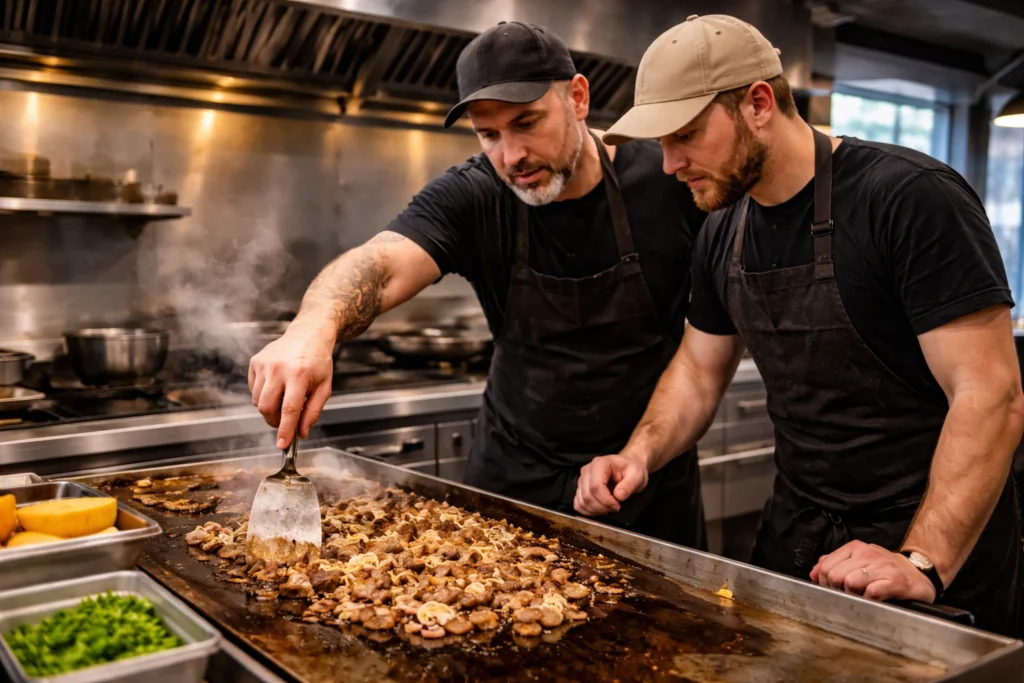
Your kitchen staff already knows how to cook, but Philly techniques require unlearning what most Australian kitchens teach about grilling and seasoning.
The chef needs to personally train each team member because interpersonal skills are just as important as cooking ability when you’re teaching cross-cultural techniques. That hands-on approach means staff watch demonstrations, practice with proper tools and equipment, then repeat tasks until muscle memory kicks in.
Here’s what your team needs to learn straight away:
- Flat-Top Grilling: Flat-top grilling technique differs completely from standard grills most cooks learn on. The flat surface means constant contact with meat, creating that signature crust while keeping interiors juicy. Staff members need hands-on practice preparing food this way because the heat distribution and timing change everything about how you cook a cheesesteak.
- Onion Technique: Chopping onions Philly-style means fine dice, then caramelising them much darker than the quick-sauté methods most Aussie cooks know. This process takes fifteen minutes (not the three-minute toss most kitchens use).
- Cheese Application: Line cooks need to learn exactly when to add cheese, so it melts without separating or burning during service. The timing is important because melting provolone requires different heat than melting cheddar on burgers.
With you’re team ready, it’s time to find out if customers want what you’re making.
Testing Recipes on Real Brisbane Diners
After running soft launches across multiple menu changes, we’ve learned that testing recipes on real customers reveals what works versus what sounds good on paper. We do this by inviting regulars to preview nights where new dishes are served in small batches, and we actively encourage feedback.
The dining area fills with regulars who know they’re tasting experimental menu items, and they come specifically for that experience. It creates honest conversations rather than polite reactions.
When you run these tests, gather their feedback on whether fusion balance works and if the dishes taste too American for Brisbane’s preferences. Also, to keep costs under control, serve limited quantities while gathering detailed feedback from each table.
In your feedback cards, ask specific questions about:
- Spice levels
- Richness
- Portion sizes
Rather than generic ratings, these targeted questions give recipe developers actionable insights to improve dishes.
Menu adjustments also happen within days when multiple customers mention the same flavour issue independently. This quick response prevents bad dishes from reaching most restaurants’ standard service, which builds satisfied customers who appreciate establishments that listen.
Bottom Line: Customer testing helps you refine experimental dishes into menu items people actually order, which improves customer satisfaction while protecting your investment.
What Happens When a Recipe Fails?
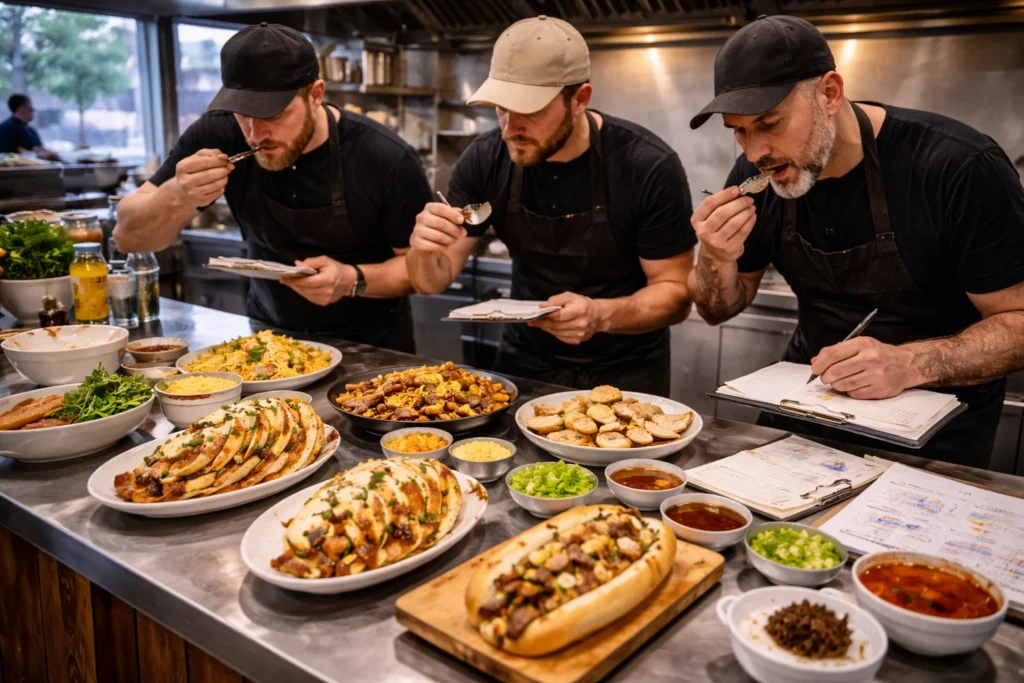
Failed recipes go back to the test kitchen for ingredient adjustments, cooking method changes, and multiple rounds of tasting until they work.
While most recipes fail at least once before they’re ready for service, this testing loop is an essential part of recipe development. And that’s what separates successful restaurants from those serving mediocre food.
We’ve been there ourselves. Our first brisket melt used far too much sauce. The sauce drowned out the meat flavour, and customers noticed straight away. That feedback showed us the issue wasn’t the recipe itself, but how the sauce was applied, which led to a complete rethink of the process.
The recipe review process focuses on pinpointing exactly what went wrong, making targeted adjustments, and testing again. At the same time, we check food safety at every stage to ensure each dish meets health standards as well as taste expectations.
This systematic approach to handling failure leads to success. The recipes that survive this loop become your strongest menu performers.
The Practical Approach to Fusion Menu Development
Recipe development for fusion menus requires balancing authentic Philly flavours with Queensland ingredients. It also involves managing food costs, training kitchen staff, and testing dishes with customers. These fundamentals separate restaurants that build lasting menus from those that struggle to gain traction.
The crucial role of systematic testing can’t be skipped. Every successful dish goes through multiple rounds before earning a permanent menu spot. That process protects both quality and investment.
This article has shared the real kitchen operations behind fusion cooking. For restaurant owners developing fusion recipes, success starts with testing, learning from failure, and improving with purpose.
Visit today to see how Byblos Philly brings these principles to life.