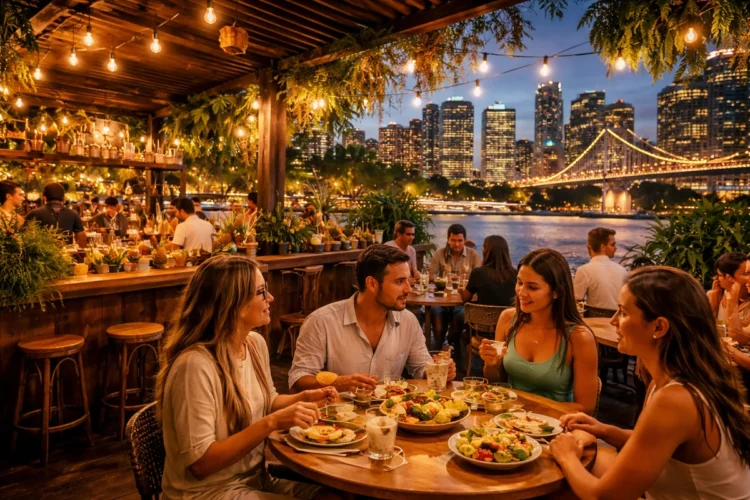
Food brands build loyal followings by creating consistent experiences that reflect what local communities value. In fact, research shows that 68% of diners base their restaurant choices on authentic online reviews and brand reputation.
Your brand personality shows up in Queensland’s competitive dining scene through menu choices, supplier partnerships, dining room atmosphere, and how staff greet customers walking through the door.
This article covers how customer experience builds reputation and which loyalty programs bring regulars back. You’ll also learn what makes your venue different from competitors, and why local supplier partnerships strengthen your food identity.
Let’s find out all the ways restaurant branding influences customer loyalty.
Why Restaurant Branding Influences Customer Loyalty
Strong restaurant branding creates repeat customers who trust your food, recommend your venue, and choose you over competitors. When your brand personality is clearly defined, diners keep coming back because they know exactly what experience they’re walking into.
This is how great branding can make casual visitors become loyal customers.
Repeat Customers Trust Familiar Brand Personalities
Consistent brand messaging across menus, staff training, and decor tells diners what to expect on every visit. Especially, personality traits like “friendly neighbourhood spot” or “upscale date night” attract specific customer types who match your vibe.
It also builds trust when your experience matches the brand promise you communicate online and through social media. Say if your website shows cosy booths, then your dining room needs to back that up with the same atmosphere.
Visual Identity Creates Instant Recognition
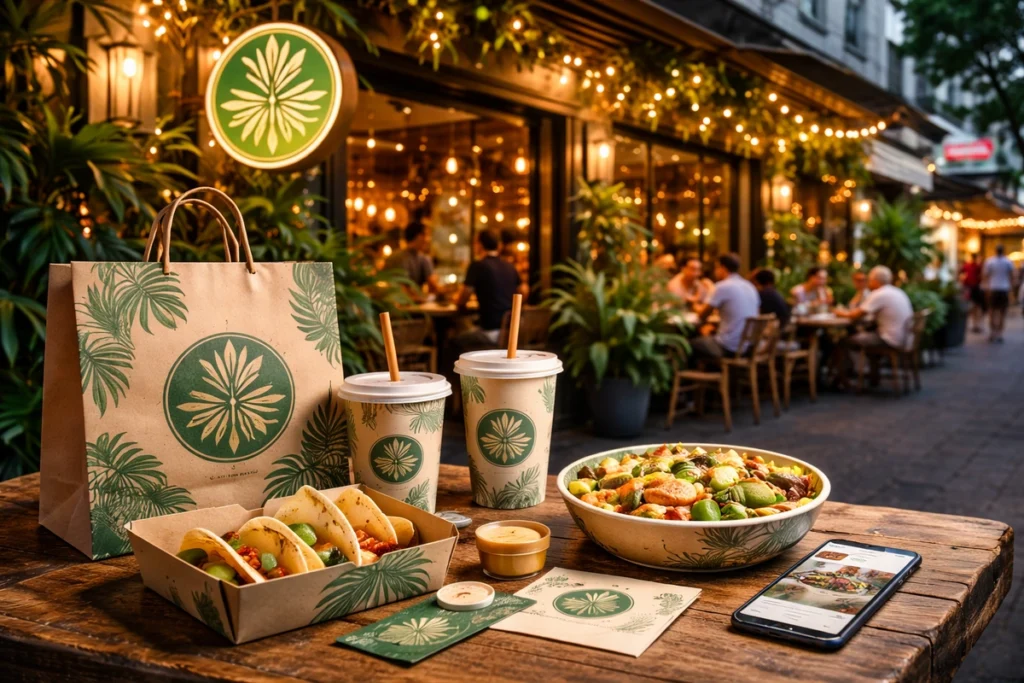
Logos, colour schemes, and fonts on signage help diners spot your restaurant from the street before they even check the name. Along with that, cohesive design across takeaway packaging, napkins, and Instagram posts reinforces your brand identity.
Your brand gets faster recognition when visual elements stay consistent instead of changing with every promotion (diners notice those little things without realising). Eventually, customers start associating your specific colours and logo with the quality service they’ve experienced.
Emotional Connections Turn Diners Into Advocates
Diners who feel connected to your story share their experiences with their mates and family members on their own. For instance, remembering regular orders or celebrating birthdays creates memorable moments, and that sparks recommendations at dinner parties.
In the long run, advocacy grows when diners believe supporting your restaurant matches their own values and community pride. It’s because they want to back local businesses that care about the same things they do.
What Makes Your Food Brand Different? Finding Your Market Position
Your unique angle could be a signature dish, atmosphere, or service style that competitors don’t offer. Most restaurants skip this step entirely, but figuring out what sets you apart is what converts browsers into buyers.
In practice, target market demographics like age, income, and lifestyle determine which branding choices resonate with your ideal diners. For example, a uni student crowd wants different vibes than families with young kids. A specific value proposition answers why someone should pick your restaurant over three others on the same block.
Competitor research often shows gaps in the market where your brand personality fills an unmet dining need. Maybe every other cafe in your suburb does minimal decor, so your colourful murals become your calling card. The pain points your customers face, like limited healthy options, lack of vegan choices, or no family-friendly venues, guide your positioning.
Pro Tip: Descriptive adjectives such as “energetic,” “comforting,” or “sophisticated” help define your brand voice and atmosphere. These can also be instructions for your entire operation, like music selection and how servers greet tables.
Customer Experience Builds Your Restaurant’s Reputation
Each interaction, like booking a table and paying the bill, affects how diners perceive your brand. And when you get customer experience right, diners will automatically tell their peers, leave five-star reviews, and book return visits.
Take a look at how you can build your brand reputation.
Interior Design Sets the Atmosphere Diners Remember
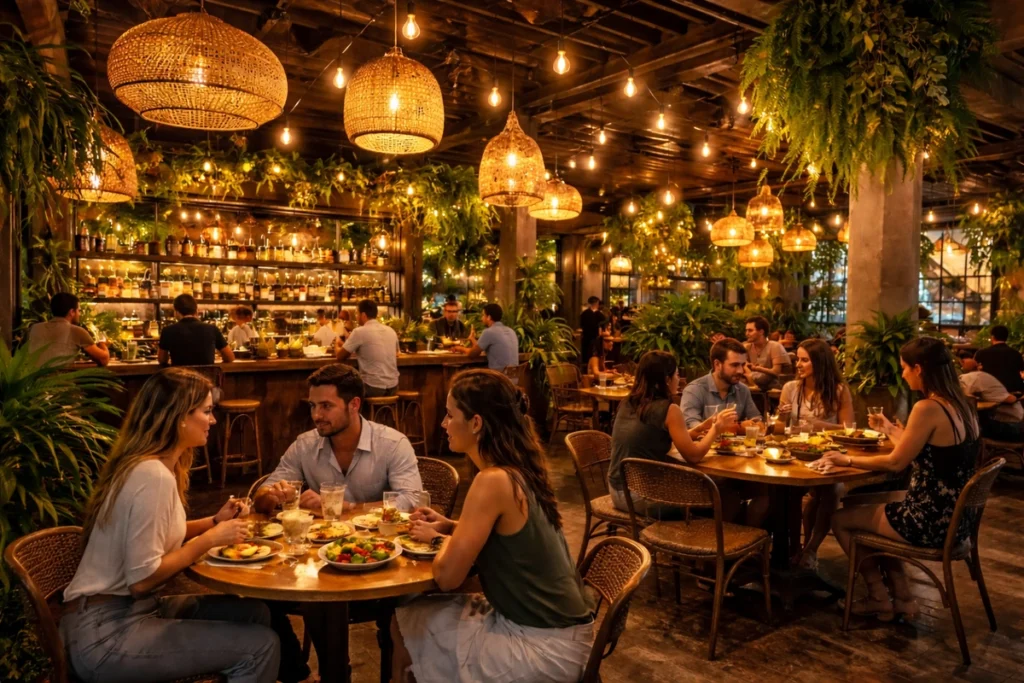
Lighting, furniture choices, and music volume create moods that match your brand. You can execute deliberate design choices like reclaimed timber or industrial fixtures to communicate your restaurant’s personality without words (might be expensive upfront, but worth it long-term).
In fact, comfortable seating and thoughtful layout show you value the dining experience. When diners settle into a well-designed space, they relax and stay longer.
Service Quality Determines Your Net Promoter Score
Friendly and knowledgeable staff who explain menu items reflect your commitment to customer satisfaction and education. Especially, a quick response to mistakes or complaints shows accountability that builds trust and improves retention rates.
Along with that, prompt service during busy periods demonstrates competence that makes diners confident recommending you to others. Gradually, your net promoter score climbs if customers feel valued by a professional service that never makes them wait unnecessarily for food or the bill.
Menu Storytelling Connects Food to Local Identity
Ingredient sourcing details, such as Sunshine Coast tomatoes or Bundaberg rum, tie your dishes to regional producers and farms. Particularly, recipe backstories about family traditions or chef inspiration give diners conversation starters and emotional investment in what they’re eating.
Beyond these, seasonal menu changes show you adapt to what’s fresh and available, not just what’s convenient to order. This connects your restaurant to the natural rhythms of Queensland farming.
Local Suppliers and Community Ties Strengthen Food Brand Identity
Research from the National Restaurant Association shows 76% of diners prefer restaurants that source ingredients locally. When you partner with nearby farms and producers, you prove your restaurant values quality ingredients and Queensland communities.
Here are some ways to strengthen your brand identity:
- Menu Transparency Builds Trust: Naming suppliers on menus like cheese from Maleny Dairies builds transparency that modern diners actively seek out. We’ve seen how people want to know the person growing their tomatoes.
- Community Investment Pays Off: Supporting local economies resonates with customers who want their money benefiting nearby families, instead of distant corporations. This move alone can make all the difference when diners choose between you and a franchise.
- Farm Stories Create Connection: Harvest stories from farmers add depth to menu descriptions and give servers talking points for tables that ask questions. Plus, farm visits and producer photos on social media create authentic content that differentiates you from chain competitors.
- Freshness You Can Taste: Shorter supply chains mean fresher produce that tastes better and lasts longer in your kitchen storage. It’s because strawberries picked yesterday morning are much better than the ones shipped across the country for a week.
Working alongside Brisbane operators for years showed us that supplier stories resonate with customers who want transparency about where their food comes from. The connection between your kitchen and local farms creates marketing opportunities you can’t get anywhere else.
Loyalty Programs That Keep Diners Coming Back
Research from Harvard Business Review shows that increasing customer retention rates by just 5% can boost profits by 25% to 95%.
It’s because strategic loyalty programs reward the customer behaviour that brings value to your brand (frequent visits and honest feedback). Frankly, running campaigns across Queensland venues taught us that the best programs focus on building relationships, not just tracking purchases.
Take a look at how you can build a loyal customer base.
Email Marketing Reminds Your Customer Base Why They Love You
Regular newsletters with new menu items, chef specials, and event announcements keep your brand top of mind between visits. Along with that, birthday offers and anniversary emails make customers feel valued.
Sometimes, exclusive previews for loyalty members, like new dishes or booking priority, create VIP treatment and encourage sign-ups. Because when you browse your inbox and see a restaurant offering you first access to their winter menu, that feels special.

Rewarding Frequency Over Transaction Size
Points for visits instead of dollars spent encourage regulars to come back even without an occasion. To give you an idea, tiered rewards like bronze, silver, and gold status gamify the dining experience and motivate customers to reach milestones.
Furthermore, free appetisers or drinks after a certain number of visits cost you less than discounting entire meals. This keeps your revenue steady while customers feel rewarded for their loyalty.
Turning Regular Customers Into Word-of-Mouth Champions
Referral bonuses expand your customer base through trusted recommendations. On top of that, social media shout-outs for loyal diners encourage online engagement. This also motivates user-generated content that you can reshare to attract new customers interested in joining your community.
Meanwhile, asking for feedback through surveys shows you care about improving and makes customers feel heard and respected. Ultimately, satisfied customers who provide feedback often become your most vocal supporters because they’ve helped upgrade your business.
Build Your Restaurant’s Brand Identity This Week
Restaurant branding that reflects local identity creates customer loyalty. The brands that succeed in Brisbane’s competitive dining scene usually create experiences people want to be part of. Check out Byblos Philly, which shows how bringing Philadelphia flavours into Brisbane’s food scene creates a brand personality diners remember and talk about with friends.
That’s why we suggest testing your branding decisions with regular customers before rolling them out across all touchpoints. Their feedback tells you what resonates and what feels off-brand.
So take a moment to think about what sets you apart from every other venue competing for the same customers. After all, your restaurant’s story deserves to be told in a way that connects with your community.