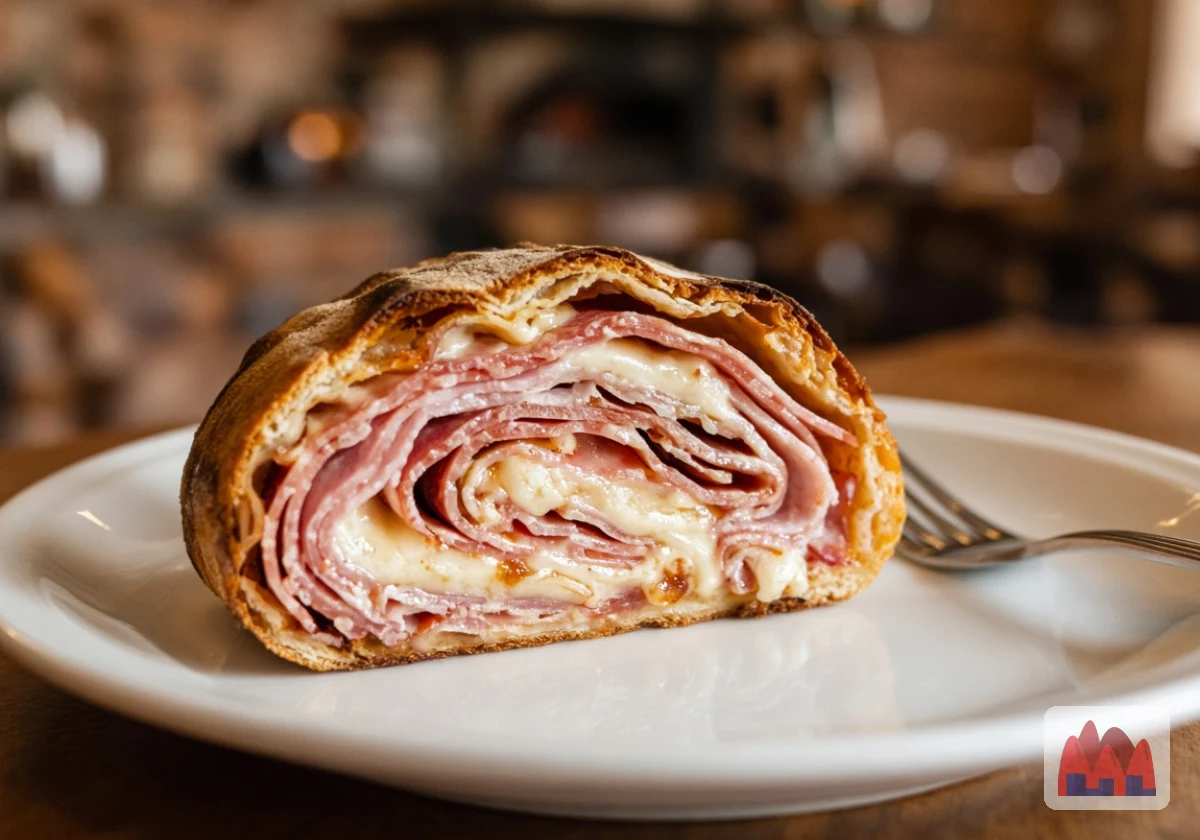
Stromboli is a rolled, sliceable log of pizza dough wrapped around cured meats and melted cheese. Despite its Italian-sounding name, the dish traces its origins to Romano’s Pizzeria in Essington, near Philadelphia.
That history gives Byblos Philly a connection to the stromboli vs. calzone debate, as we serve Philadelphia-inspired food in Queensland. The comparison starts with how cooks roll or fold the dough, then continues with the fillings and sauce.
This guide covers where stromboli started, how its name links to a volcano and a 1950 film, and how it compares with a calzone side by side. You’ll also get a five-step homemade method plus serving and storage habits.
So read on.
What Is Stromboli and Where Did It Come From?
Stromboli is an American pizzeria creation, first sold in the Philadelphia area in 1950. Bakers cut it into thick rounds, so each slice shows a spiral of salami, ham and melted mozzarella cheese.
Thinking about stromboli food origins? Three parts of the story often get mixed up, and each one explains the dish’s inventor, its name or its Italian roots.
A Philadelphia Pizzeria Claims the First Stromboli
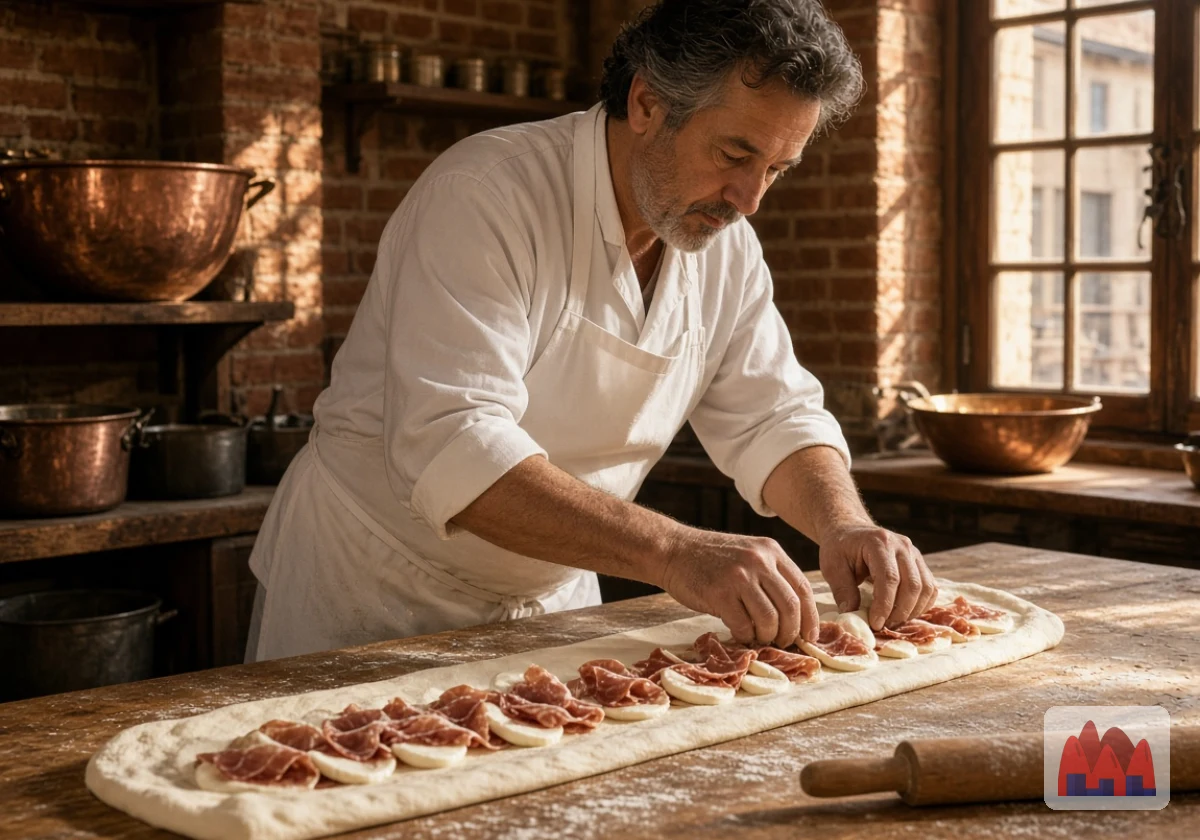
Nazzareno Romano gets the credit for inventing stromboli, according to his family. He sold the first stromboli in 1950 at Romano’s Italian Restaurant & Pizzeria in Essington, just outside Philadelphia.
While creating stromboli, his idea was simple: roll the pizza toppings inside the dough so customers could eat on the go. That handheld design suited workers grabbing a quick lunch, and it still suits anyone eating away from a table.
Romano’s isn’t the only origin story, though. Spokane in Washington and Essington claim they created the 1950s stromboli, too. Still, the Romano story carries the earliest date, so start there if you’re tracing the dish yourself.
Why the Name Points to a Volcano and a Film, Not a Recipe
Romano’s family borrowed the name from a film rather than a cooking term. Roberto Rossellini’s 1950 drama Stromboli, starring Ingrid Bergman, made headlines that year.
That film took its title from Stromboli, an active volcano off the north coast of Sicily. So the dish carries a name of Italian origin with no Italian recipe behind it (a clever bit of marketing from a busy pizzeria).
As the name and the recipe come from different places, expect a puzzled look if you mention stromboli as a dish to an Italian visitor. In Italy, stromboli means the island, and you won’t usually find a rolled loaf by that name on menus.
How Italian Immigrants Influenced an American Dish
Italian immigrants brought the building blocks: bread dough, cured meats, provolone and a habit of baking stuffed breads. That last habit came from home, where Southern Italian cooks made filled breads like Sicilian scaccia (a folded bread layered with tomato and cheese).
So what changed in Philadelphia was the format. The cheesesteak went through the same shift, as Italian rolls and provolone became a quick sandwich for busy Philadelphia lunch counters.
At that time, Pizzerias needed food that was portable and cheap to slice, so the old stuffed bread became a log sold by the piece. Selling by the slice also let one log serve several customers, which kept costs down for both the pizzeria and its regulars. That shift from a whole stuffed bread to a sliced log is the true American invention, while the fillings still carry the Italian heritage.
Stromboli vs Calzone: The Key Differences at a Glance
Stromboli and calzone both tuck cheese and cured meats inside baked pizza dough, so they might look alike at first glance. Underneath, though, stromboli and calzone are different in shape and sauce. Yet plenty of menus still get both wrong by listing them as one dish.
Below, we’ve laid out how the two compare on six points.
| Feature | Stromboli | Calzone | What It Means for You |
|---|---|---|---|
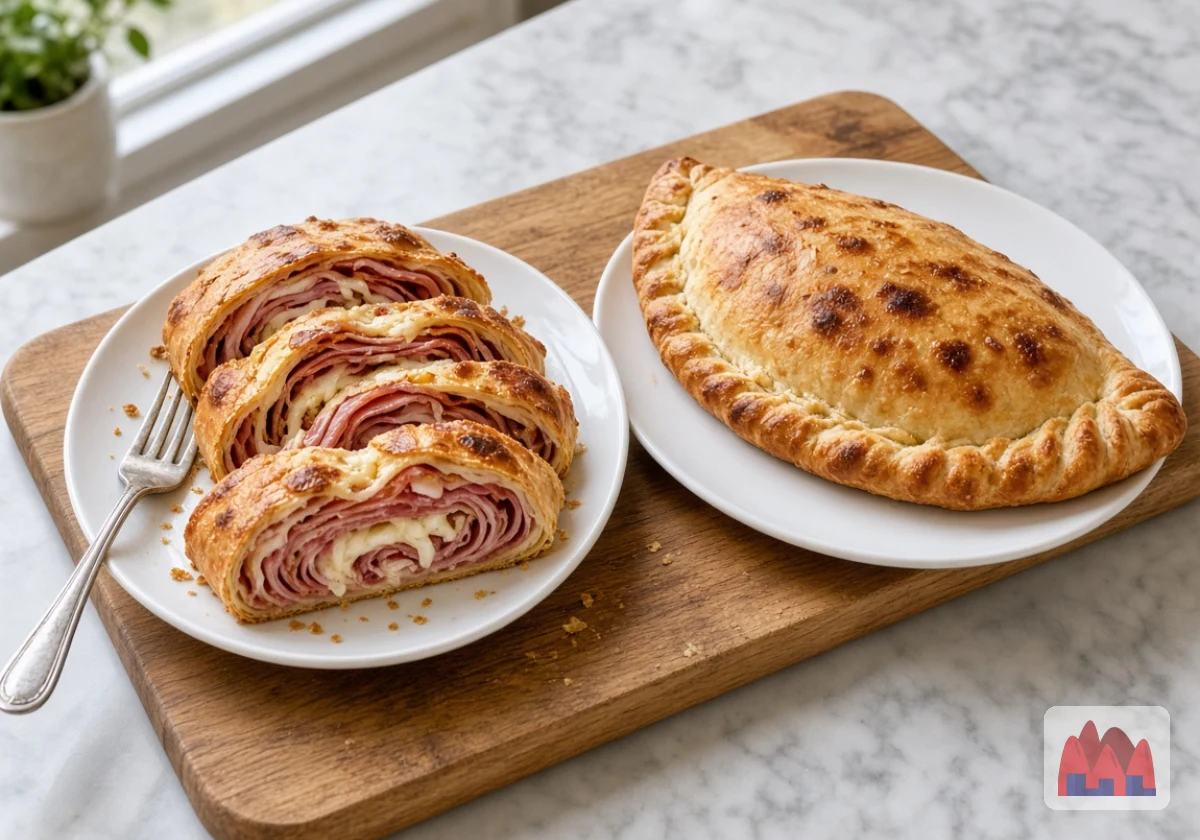
| Shape | Long rectangle rolled into a log | Circle of dough | Stromboli slices into rounds, while a calzone stays whole |
| Fold | Rolled up and sealed along one seam | Folded in half and crimped into a half-moon | Crimp homemade calzone edges firmly to stop leaks |
| Sauce | Usually kept out of the filling and served on the side | Neapolitan versions often bake tomato sauce inside | Order stromboli if you dislike wet fillings |
| Cheese | Mozzarella and provolone | Ricotta cheese plus mozzarella | Ricotta gives a calzone a creamier, softer centre |
| Origin | Philadelphia area, 1950 | Naples, around the 18th century | Expect regional twists on calzone across Italy |
| Serving Size | Sliced log that feeds three to four | Single portion for one person | Pick stromboli for sharing and calzone for a solo meal |
So when you weigh up stromboli vs calzone, the serving size row usually decides most orders, since a stromboli is built for a shared table. The calzone tells a different story through its name, which means “pant leg” in Italian, a nod to its pocket-like fold. That single pocket is why one person usually eats the whole thing.
Making Homemade Stromboli from Pizza Dough
The best part of homemade stromboli is that one batch of pizza dough feeds four people without struggle. In our experience, rolled breads reward patience more than skill, so give yourself time between steps rather than rushing.
Once you know the rolled log shape that sets stromboli apart from a calzone, making one at home gets much easier.
Stromboli pizza dough method breaks into five steps, and you can work through each one on any weeknight.
1. Roll Out the Dough into a Rectangle
Stretch the dough on a floured bench into a rectangle about the size of your baking sheet. Then aim for an even thickness, because thin patches tear once the filling goes on.
If the dough keeps springing back, cover it and leave it for 10 minutes. During that rest, the stretchy protein in flour called “Gluten” relaxes, so the rectangle holds its size.
2. Layer the Italian Meats and Cheese, Leaving a Border
After rolling out the dough, lay Italian salami, ham or pepperoni first, or swap in sliced grilled chicken for a lighter loaf. Next, add mozzarella and provolone on top, leaving a bare border of about two centimetres so the seam sticks when you roll.
If you want to add more fillings at this stage, keep wet extras like roasted capsicum or spinach to a thin layer. Remember, too much moisture turns the inside soggy (a lesson most home cooks only need to learn once).
3. Roll It into a Log and Seal the Edges
With the fillings in place, your dough is ready to become a stromboli. Your best starting point is a long edge, so roll the dough away from you into a firm log. Once the log holds its shape, pinch the seam closed, then tuck and press both ends shut.
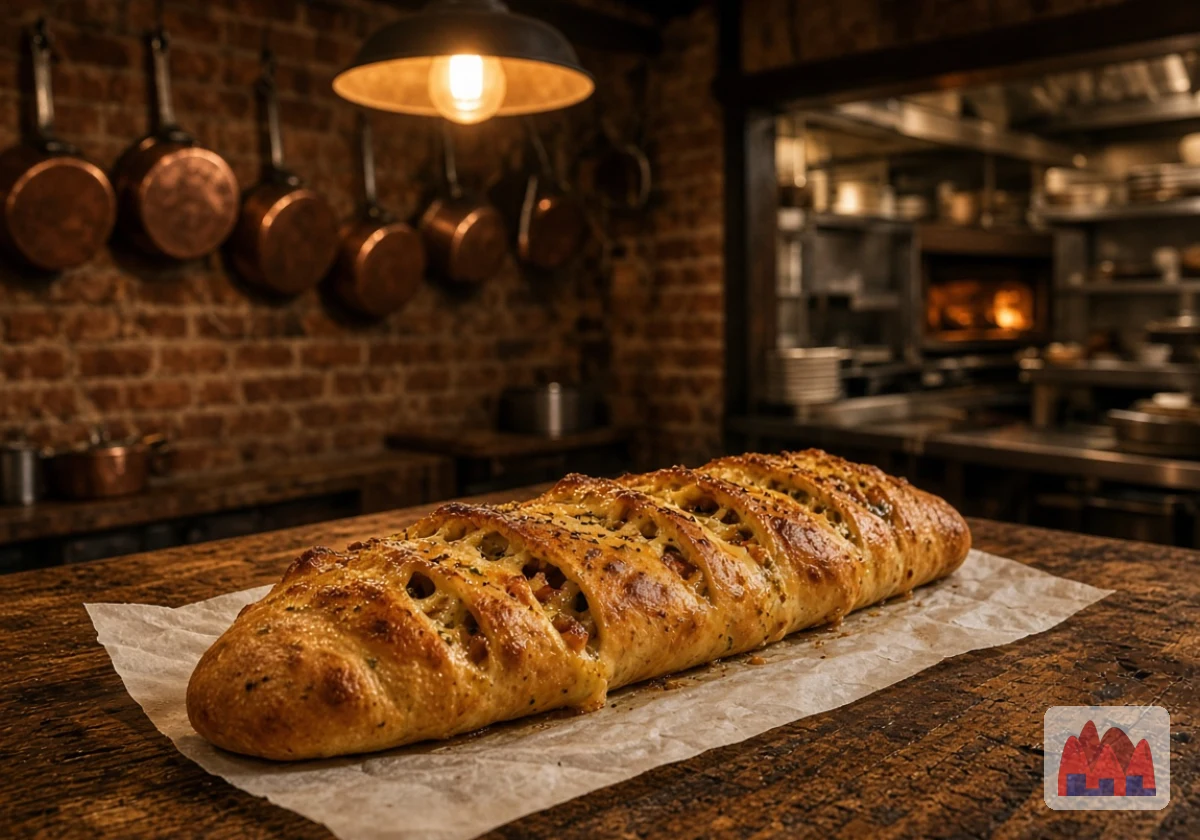
After that, place the sealed stromboli log seam side down on a tray lined with baking paper. That position is important because the log’s own weight presses down on the join and keeps it firmly closed while baking. As a result, the cheese stays inside as it melts instead of pooling on the tray.
4. Brush with Egg Wash and Score the Top
Brush the top with an egg wash, which is one egg beaten with a splash of water. This addition gives the crust its shine and deep golden colour, while a brush of olive oil gives a crisp, egg-free finish.
Then cut three or four shallow slashes across the top with a sharp knife. These vents let steam escape, which stops the log from splitting along its side.
5. Bake Until Golden Brown, Then Rest Before Slicing
Generally, you need to bake the stromboli at around 200°C until golden brown, usually 20 to 25 minutes. Later, a hollow sound when you tap the base tells you the dough has cooked through.
After baking, rest it for about 10 minutes before slicing. Melted cheese firms slightly during that wait, so each round holds its spiral when you cut.
Serving and Storing Stromboli the Italian-American Way
In Philadelphia, people usually serve Italian-American stromboli with a bowl of warm tomato sauce for dunking (the messier your fingers get, the better it tastes).
But when we put together Philly-style catering platters, we lay slices cut-side up, so guests can see the fillings before they choose. And if you’d rather skip the cooking, our Philly-inspired dine-in menu brings that same Philadelphia spirit to the table.
Leftovers need more care, because cured meat and cheese spoil once they sit out. Food Standards Australia New Zealand updated its FSANZ food safety basics page in 2025 with clear advice on this. According to that guidance, you should “keep perishable leftovers in the fridge and use them up within a few days”.
To get the most from each loaf, try these serving and storage habits:
- Dipping Sauce: Serve warm marinara on the side, kept thick so it clings to each slice.
- Footy Platter: Slice it into rounds for a Saturday arvo crowd, with a green salad as a side dish.
- Quick Chilling: Wrap cooled leftovers tightly and refrigerate them straight away.
- Crisp Reheating: The oven or air fryer will bring leftover slices back to life without making the crust soggy.
- No Microwave: Skip it, because it turns the crust soft and chewy. Stick to the oven or air fryer for better results.
Pick two or three of these, and your second-day stromboli will taste close to the first. If you only pick two, start with quick chilling and crisp reheating, since fast chilling keeps leftovers safe and dry heat brings back the crunch.
Ready to Roll Your Own Stromboli?
Stromboli is an Italian-American invention from a Philadelphia-area pizzeria. That origin explains its log size, sliceable serving style and side of sauce, which is everything that separates it from a calzone.
So grab some pizza dough and Italian meats this weekend and try the rolling technique yourself. Your first loaf might look rustic, yet it’ll still feed the whole table.
Ready to taste Philly-inspired cooking without the prep? Get in touch with Byblos Philly for dine-in, delivery or catering questions.