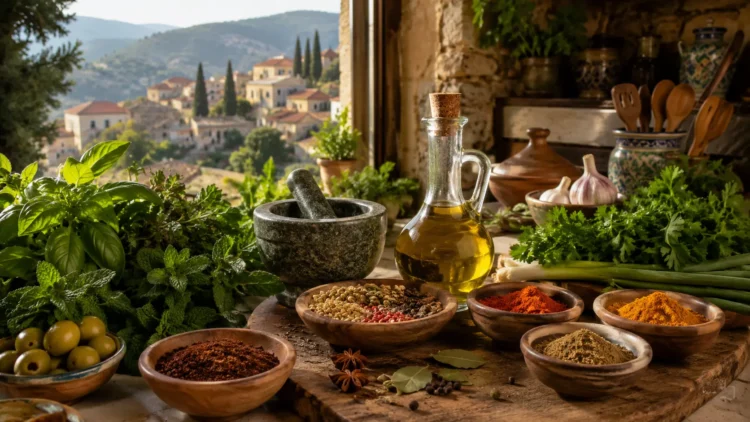
If you have ever tried Lebanese cuisine before, you already know there is something different about it. Fresh herbs, warm spices, and good olive oil bring those vibrant flavours to every dish. And Lebanese cooks have been building dishes that way for generations.
What makes it interesting is how few ingredients do the work. Chances are, most are already in your kitchen. What Lebanese cooking does with them, though, is something else entirely.
That is what we are unpacking here. We are covering the spices, fresh herbs, oils, and pantry staples that show up in Lebanese cooking day after day. By the end, you will know what to stock and how to use it.
What Makes Lebanese Cuisine Stand Apart in the Middle East
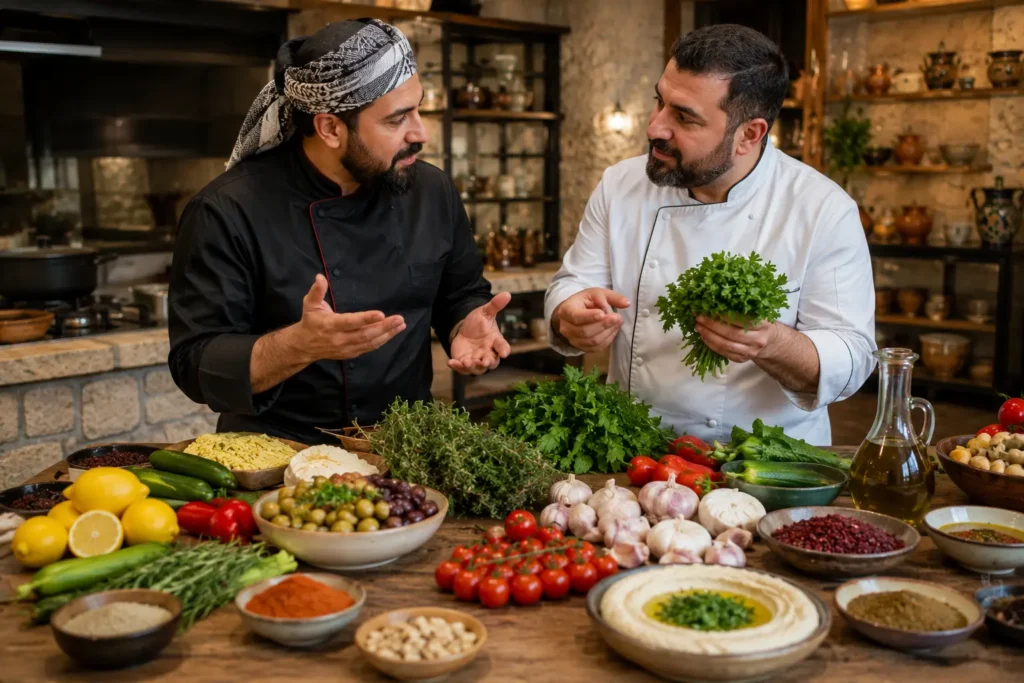
What sets Lebanese cuisine apart in the Middle East is its focus on fresh herbs, restrained spicing, and extra virgin olive oil over rich, heavy bases. Lebanon’s position in the world drove that. Sitting between the Mediterranean and the broader Middle East left a permanent mark on its food.
To see why, it helps to look at two things: Lebanese culinary roots, and how the cuisine treats its ingredients.
Rooted in Middle Eastern Culinary Tradition
Lebanon has been a meeting point for traders, travellers, and cultures for thousands of years. That history is in the food, and you can taste it in every dish. So even when the ingredients look familiar, the vibrant flavours always taste distinctly Lebanese.
Fresh Herbs Over Heavy Sauces
Most Middle Eastern cuisines lean on slow-cooked sauces and heavy spice pastes. But not Lebanese cooking. Fresh herbs like parsley and mint do most of the heavy lifting, and olive oil handles the richness that butter or cream would carry elsewhere.
So naturally, you walk away from a Lebanese meal satisfied. It is that same quality that keeps Lebanese dishes at the centre of Mediterranean recipes worldwide.
Lebanese Spices: The Blends That Define Every Bite
Ever wondered why Lebanese food hits differently from other Middle Eastern dishes? It is the spice blend, every single time.
Those blends start with a core set of spices: cumin, cinnamon, allspice, and coriander. What Lebanese cooking does is take those everyday spices and build something more complex out of them.
Seven-spice, known locally as baharat, is where that complexity comes from. It works like a conductor, giving every individual spice a role and pulling them all into one cohesive blend. You’ll find it in minced meat dishes, bulgur wheat, side dishes, and roasted vegetables alike.
And it does not stop there. Fresh parsley, mint, and salt pull just as much weight as the dry spices do (trust us, supermarket blends rarely fool anyone). Leave even ONE out, and the warmth that makes Lebanese food so recognisable disappears with it.
Olive Oil and Other Pantry Staples in Lebanese Cooking
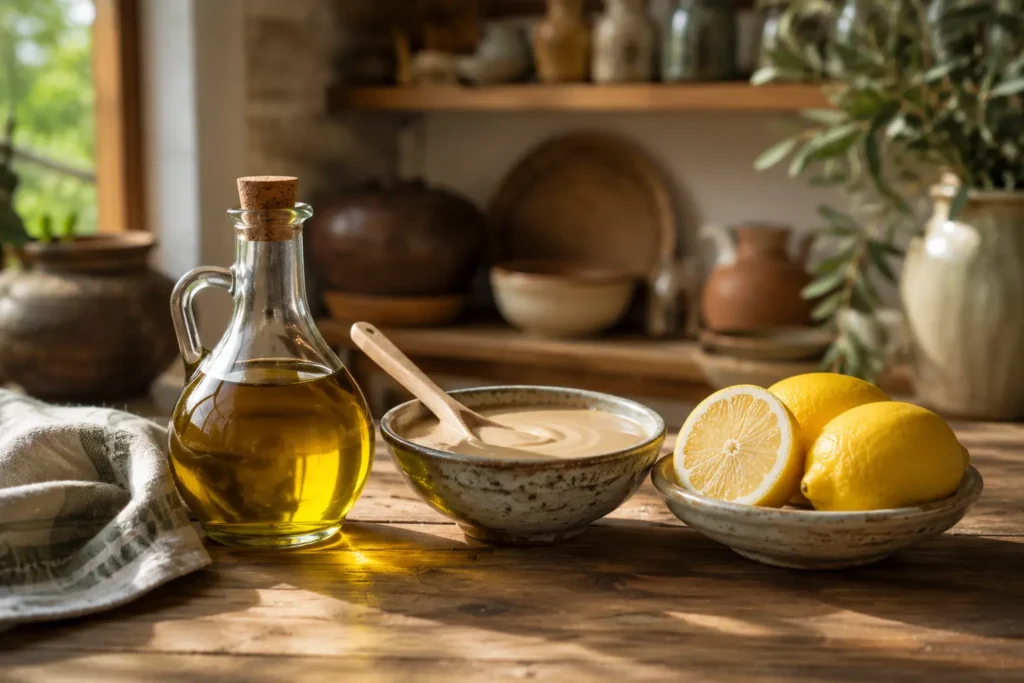
If you stocked a Lebanese pantry from scratch, you would not need much. Most recipes come back to three core staples: extra virgin olive oil, tahini, and lemon juice. And each one earns its place for a very specific reason:
- Extra Virgin Olive Oil: Lebanese cooking leans on extra virgin olive oil harder than any other ingredient. It carries richness, adds depth, and ties every dish together in a way nothing else quite manages.
- Tahini and Lemon Juice: These two are inseparable in Lebanese cooking. Tahini brings a nutty creaminess to dips and salads, and lemon juice is what stops the whole thing from feeling heavy.
- Tomato Paste, Garlic, and Onions: Ask any Lebanese cook what goes in first, and the answer is always the same. Tomato paste, garlic, and onions build the savoury foundation that gives Lebanese dishes their depth and warmth.
- Yogurt, Olives, and Pita Bread: A Lebanese spread without yogurt, olives, and pita bread is technically possible. Nobody would enjoy it, though. Yogurt cools, olives add a briny kick, and Lebanese bread like pita ties every bite together.
These ingredients come up in our kitchen every single service. What’s even more interesting is that eating them regularly pays off too. Research across 45 studies found that people who eat olive oil regularly are 31% less likely to develop cancer.
Turns out, eating well and eating Lebanese are not all that different.
What Finishes a Lebanese Dish
In Lebanese cooking, what goes on last is just as important as what goes in first. Toum, pine nuts, and tahini are the three finishing touches that complete every plate.
Of the three, toum is the one that hits you first. It is a garlic sauce built in a food processor from garlic, oil, and lemon juice, and the ratio is not something you eyeball (Lebanese cooks knew this for centuries).
So what do toum, pine nuts, and tahini do, you ask?
|
Ingredient |
What It Is |
How It Is Used |
Common Dishes |
|
Toum |
Lebanese garlic sauce |
Spread, dip, marinade |
Chicken, pita bread, grilled meat |
|
Pine Nuts |
Toasted tree nuts |
Scattered over dishes before serving |
Rice, salads, minced meat |
|
Tahini |
Sesame seed paste |
Mixed into dips or drizzled over dishes |
Hummus, falafel, salad |
That contrast of sharp, creamy, and crunchy in a single bite is what makes Lebanese food so hard to forget. Falafel, grilled meat, salads; every dish carries it.
Lebanese Cuisine: The Mediterranean Diet Connection
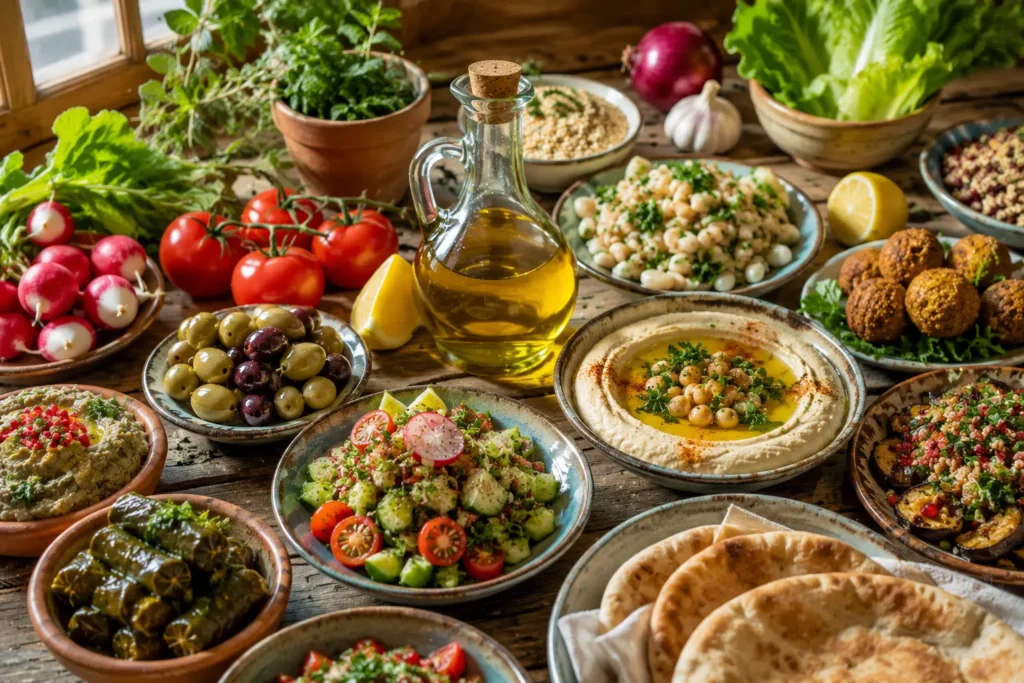
The ingredients behind Lebanese cooking are the same ones that form the foundation of the Mediterranean diet. Plants, legumes, fresh herbs, and olive oil have been central to Lebanese food for centuries, long before anyone gave them a label.
Modern research eventually caught up with what Lebanese kitchens already knew. Traditional Lebanese food is now consistently identified as one of the healthiest eating patterns in the world, and the ingredients are the reason why.
Today, Lebanese pantry staples like hummus, chickpeas, and yogurt appear on grocery lists far outside the Middle Eastern community. Their influence keeps growing. You see it in grain bowls, modern salads, and everyday dips across the globe.
Your New Favourite Cuisine Starts in the Pantry
Lebanese cooking has a reputation for bold, layered flavour, and most people assume that kind of cooking is complicated. The truth is, it’s not. The right pantry staples, used the right way, are all it takes to get there.
To make things simpler for you, this guide walks through Lebanese spices, core pantry staples, and finishing touches that make Lebanese cuisine hard to forget. Each ingredient has a job, and none of them is complicated.
At Byblos Philly, these ingredients go into each dish we serve, without exception. We have a genuine love for this cuisine, and you will taste that the moment your food arrives. Come in and experience Lebanese cooking the way it was always meant to be eaten.